
Symptoms to discuss
- Predictable leg pain with walking that settles after resting.
- Pain in the foot at night or when lying flat.
- Toe, foot, or leg wounds that are not healing as expected.
- Changes in foot colour, temperature, sensation, or pulses.
Leg circulation
Mr Oliver Lyons assesses peripheral arterial disease through NZ Vascular in Christchurch. Often shortened to PAD, it is reduced blood flow to the legs or feet and can cause calf, thigh, or buttock pain with walking, rest pain, ulcers, or wounds that are slow to heal.
Clinical information provided by Mr Oliver Lyons FRCS PhD, Consultant Vascular, Endovascular and Kidney Transplant Surgeon at NZ Vascular in Christchurch.
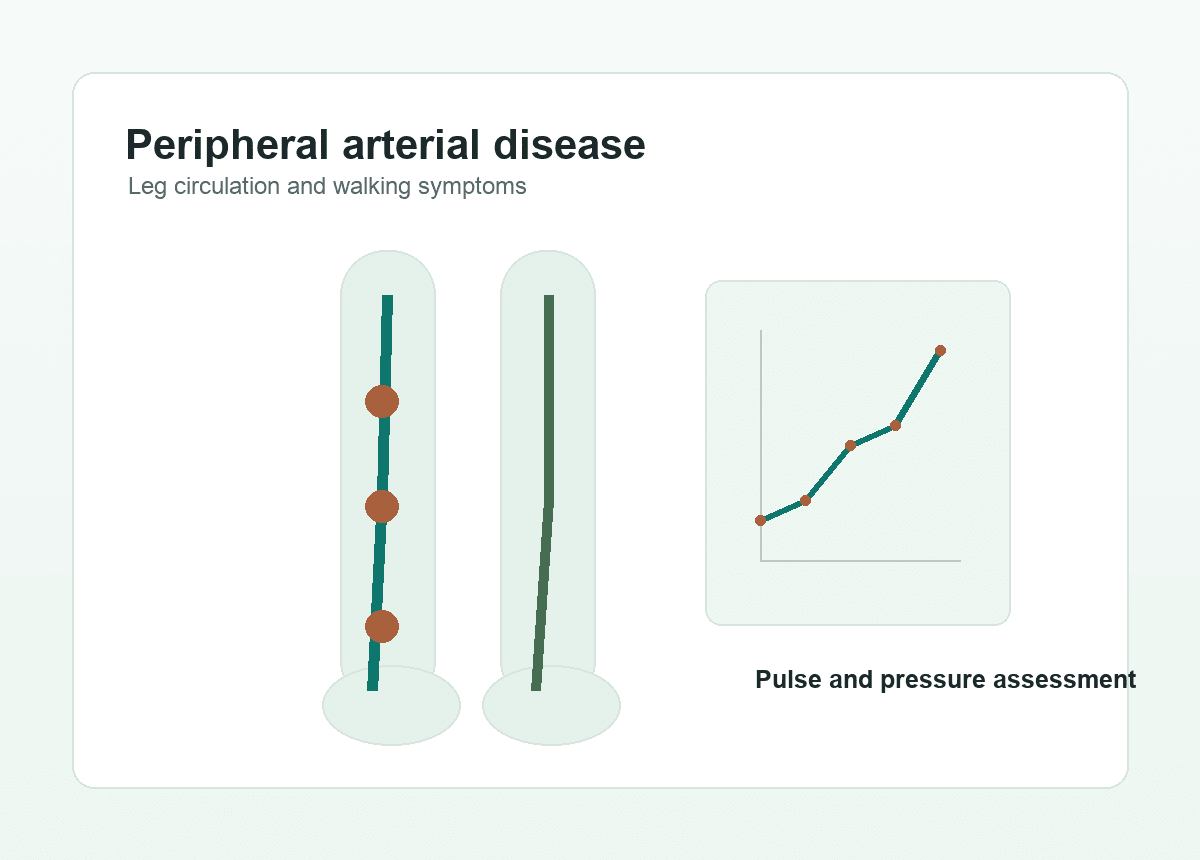
Assessment may include pulse examination, ankle pressure testing, duplex ultrasound, and vascular imaging. Medical care including diabetes control, smoking, cholesterol, blood pressure, kidney function, and medicines can strongly affect outcomes.
For stable walking symptoms, supervised or structured walking, smoking cessation, foot care, and medical therapy can be important. Procedures are considered when symptoms remain limiting or when there is limb-threatening disease. Oliver is able to offer a range of treatments including balloon angioplasty, stents, and open surgical bypass. Each treatment option has different risks and benefits, which will be discussed with you.
Sudden severe leg or foot pain with coldness, numbness, weakness, or colour change is urgent. Call 111 or attend an emergency department.
Next step
Share the clinical question, relevant history, and any previous imaging so the next step can be planned appropriately.