
Symptoms that need urgent care
Face drooping, arm weakness, speech difficulty, sudden loss of vision, or sudden neurological symptoms require emergency assessment. Call 111 immediately.
Stroke-risk assessment
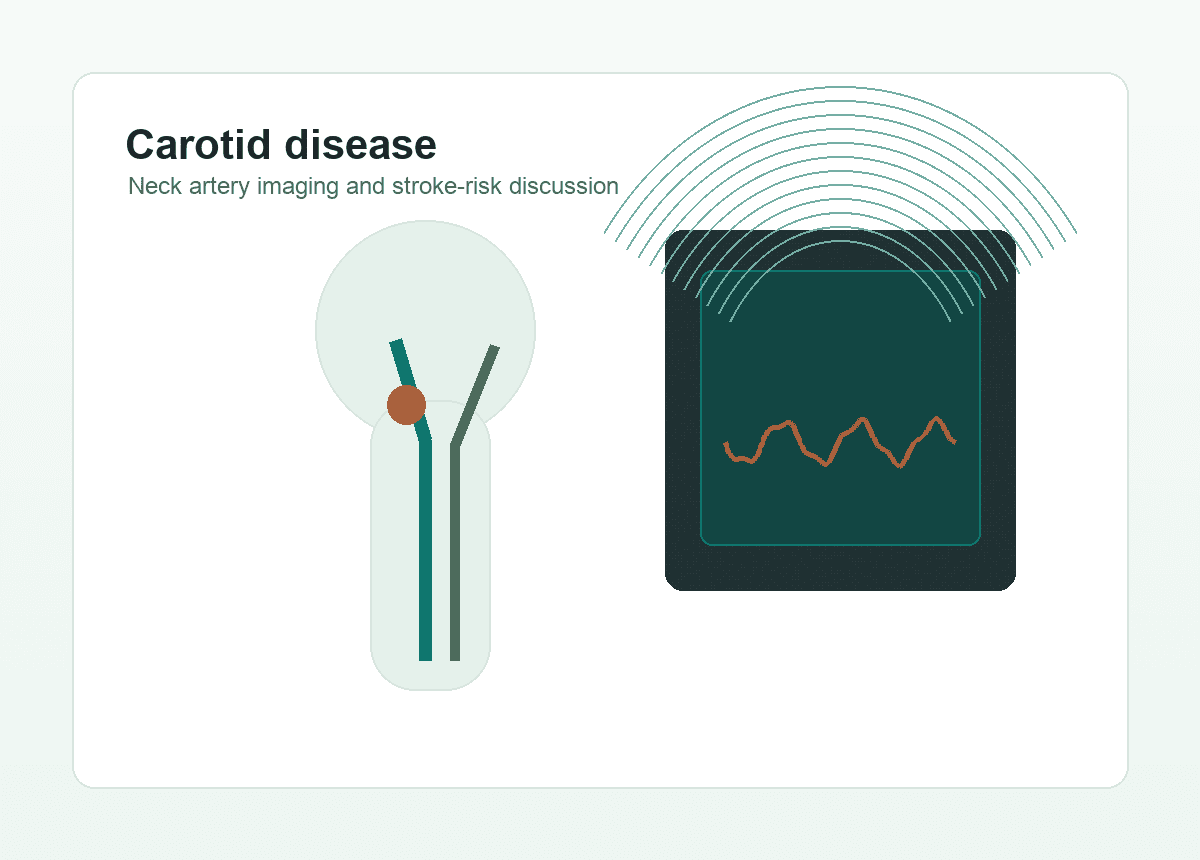
Mr Oliver Lyons assesses carotid artery disease through NZ Vascular in Christchurch. The condition involves narrowing of the arteries in the neck that supply the brain and may be found after a stroke or transient ischaemic attack, or incidentally during imaging.
Clinical information provided by Mr Oliver Lyons FRCS PhD, Consultant Vascular, Endovascular and Kidney Transplant Surgeon at NZ Vascular in Christchurch.
Face drooping, arm weakness, speech difficulty, sudden loss of vision, or sudden neurological symptoms require emergency assessment. Call 111 immediately.
The value of intervention depends on whether symptoms have occurred, degree of narrowing, timing, anatomy, surgical risk, and current best medical therapy. Advice should be individualised and based on contemporary evidence.
Next step
Share the clinical question, relevant history, and any previous imaging so the next step can be planned appropriately.