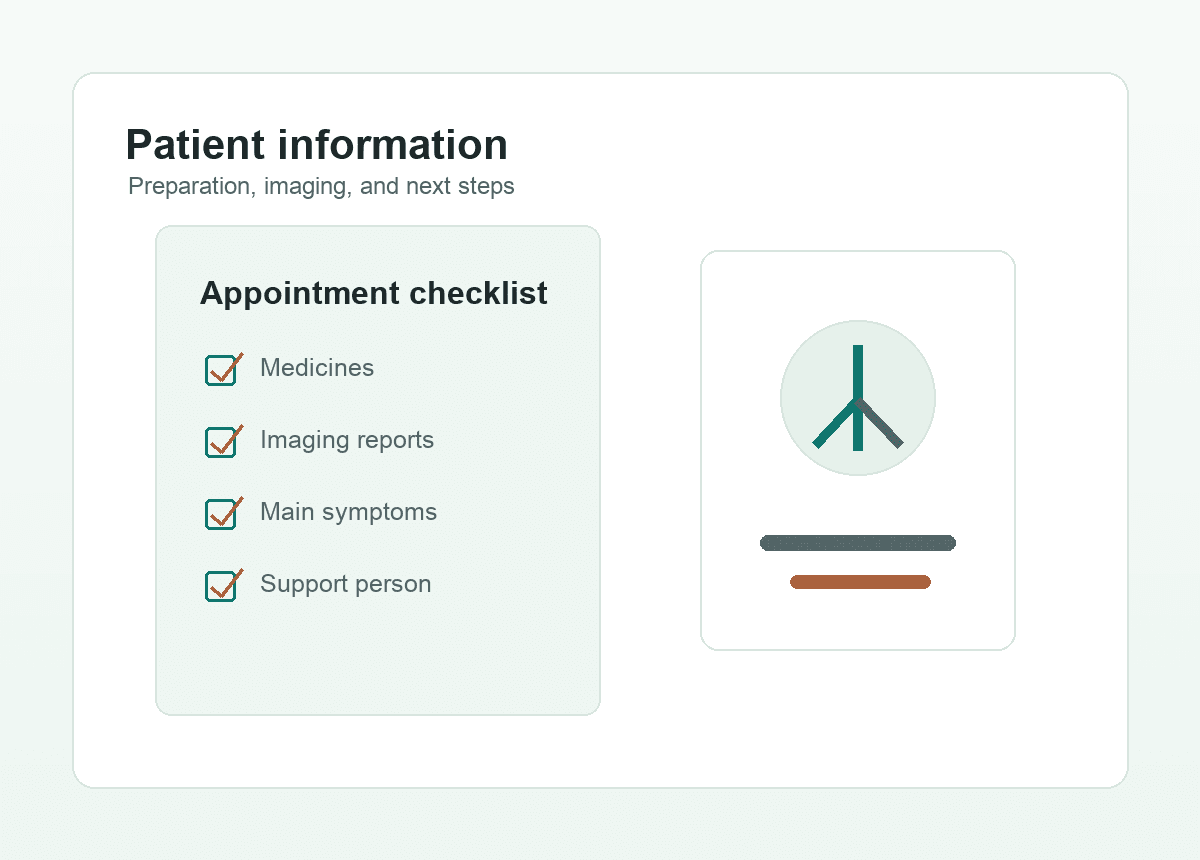
This page explains how to prepare for a vascular appointment and what information is usually helpful. It is general guidance only and does not replace advice from your GP, specialist, or emergency services.
Bring a list of current medicines, allergies, and major medical conditions.
Bring previous imaging reports and clinic letters if you have them.
Write down your main symptoms, when they started, and what makes them better or worse.
Consider bringing a support person if the decision feels complex or you would value another set of ears.
Christchurch Vascular Group
Oliver's private practice is associated with Christchurch Vascular Group. These public contact details are provided for patients who need the practice location or administrative contact information.
A consultation may include discussion of symptoms, examination, review of imaging, risk-factor assessment, and explanation of management options. Some people need further tests before a clear treatment recommendation can be made.
After treatment or procedures
Recovery advice depends on the procedure and your medical background. You will receive specific instructions about any wounds, compression, medicines, activity, driving, follow-up, and symptoms that should prompt urgent review. Patients treated on site are contacted by a nurse the next day. If you have any concerns about a possible complication of surgery, contact Christchurch Vascular Group immediately.
Seek urgent help
Stroke symptoms: face drooping, arm weakness, speech difficulty, sudden vision loss, or sudden confusion.
A suddenly cold, pale, painful, weak, or numb limb.
Severe chest, back, abdominal, or groin pain, especially with collapse or known aneurysm.
Heavy bleeding, rapidly worsening infection, fever with a wound, or severe shortness of breath.
Next step
Discuss a vascular enquiry
Share the clinical question, relevant history, and any previous imaging so the next step can be planned appropriately.