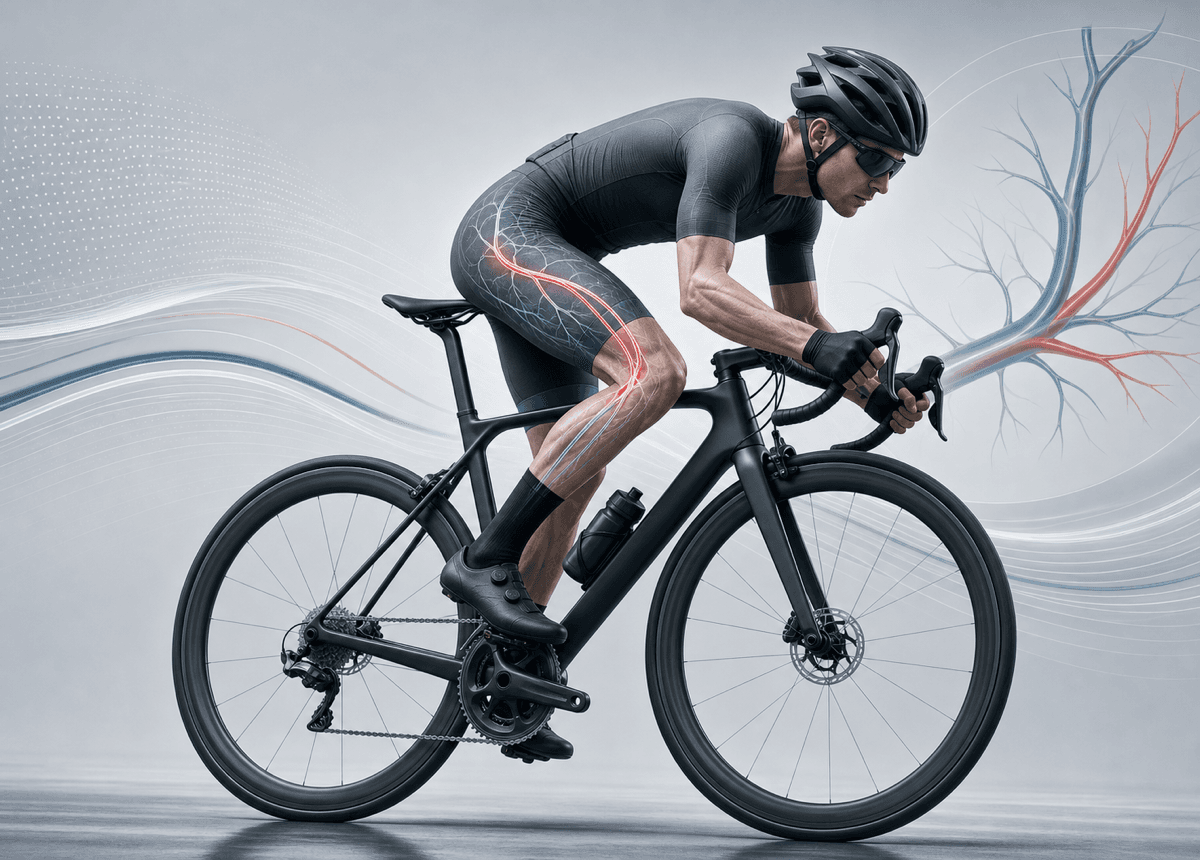
Mr Oliver Lyons provides specialist endofibrosis assessment through NZ Vascular in Christchurch for athletes from across New Zealand. Endofibrosis is an uncommon vascular condition, especially in cyclists and triathletes, where iliac artery narrowing can limit leg blood flow during high-intensity exercise while appearing normal at rest.
Clinical information provided by Mr Oliver Lyons FRCS PhD, Consultant Vascular, Endovascular and Kidney Transplant Surgeon at NZ Vascular in Christchurch.
When endofibrosis may be considered
Predictable thigh, buttock, calf, or whole-leg heaviness, cramping, weakness, or loss of power at high effort.
Symptoms that settle quickly after stopping exercise, then return when intensity rises again.
Numbness, coolness, or a feeling that one leg cannot produce power despite good fitness.
Persistent exercise-related symptoms after musculoskeletal, nerve, or training-load causes have been considered.
Why diagnosis can be delayed
Resting pulses, routine examination, and imaging can be normal because the narrowing or kinking may only become important during maximal effort or hip-flexed positions. A careful history of sport, training volume, position, symptom threshold, and recovery pattern is often central to deciding whether vascular testing is needed.
Assessment and investigations
Assessment may include pulse examination, ankle-brachial pressure measurements before and after exertion, duplex ultrasound at rest and after exercise, and selected CT, MR, or catheter angiography. Testing is usually most helpful when it is designed to reproduce the symptoms and answer a clear clinical question.
Management planning
Management depends on symptom severity, training goals, arterial anatomy, and the degree of dynamic blood-flow limitation. Some people consider activity modification, bike-fit or training changes, and monitoring. Surgery may be discussed when symptoms are disabling and investigations show significant flow limitation, but decisions need an individual discussion of risks, benefits, recovery, and uncertainty.
Medical information disclaimer
This website provides general information only. It does not diagnose endofibrosis and does not replace advice from your doctor or specialist.
Questions
Common questions
Is endofibrosis only seen in professional cyclists?
No. It is most commonly reported in high-volume endurance cyclists, but it has also been described in recreational cyclists and other endurance athletes.
Why might tests be normal at rest?
Endofibrosis can be dynamic. Blood flow may be adequate at rest but limited during high-intensity exercise or positions that place mechanical stress on the iliac artery.
Does everyone need surgery?
No. Treatment planning depends on symptoms, goals, imaging findings, and the balance of benefit and risk. Surgery is generally considered only after specialist assessment and appropriate investigations.
Next step
Discuss a vascular enquiry
Share the clinical question, relevant history, and any previous imaging so the next step can be planned appropriately.